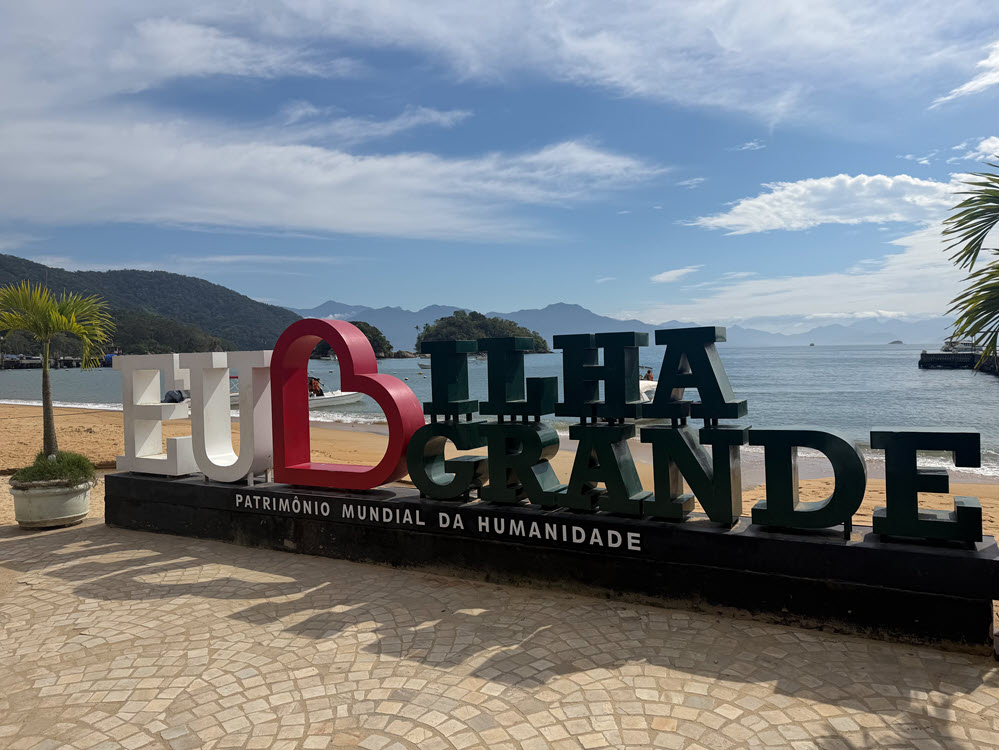
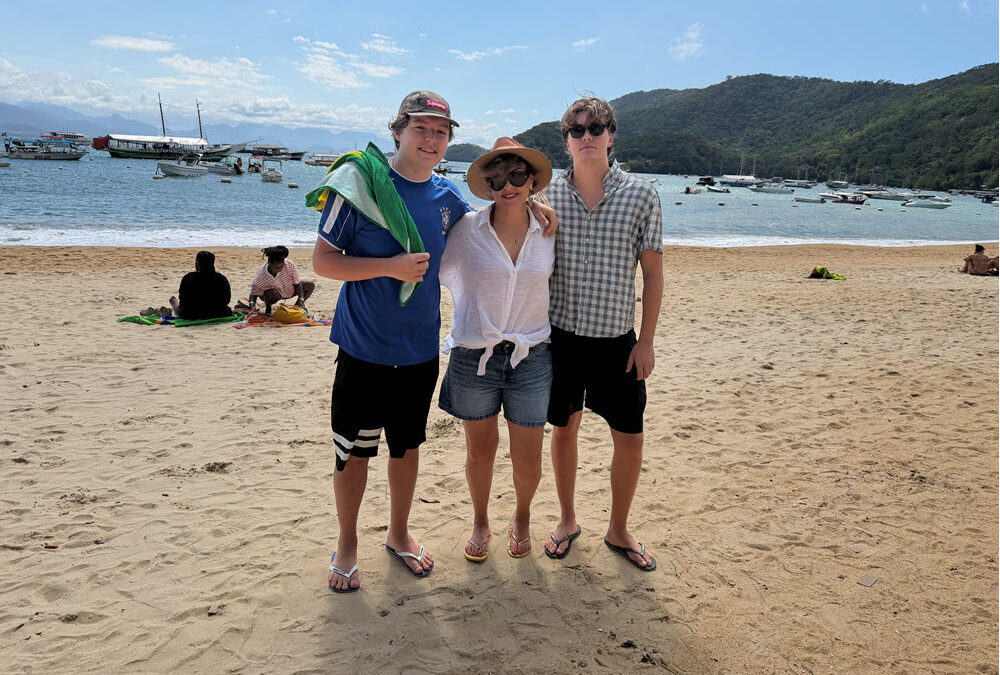
I’m writing this from a small island in Brazil, where my children brought me to celebrate my 50th birthday.
It’s the kind of gift that stays with you. Not a thing, but an experience. Time together, somewhere completely different, and the chance to slow down and see the world through fresh eyes.
There is just one small problem.
I don’t speak a word of Portuguese.
Well… perhaps three words now.
I’ve tried, of course. A few phrases here and there, usually pronounced very badly. And I’ve noticed something each time I try: a smile, a softening, a little shift in the interaction.
Many of the people I’ve met here don’t speak much English either. Yet between gestures, broken sentences, Google Translate occasionally coming to the rescue, and plenty of laughter at our own mistakes, we manage.
More than that, we connect.
People ask about my life in Europe. Some tell me about the one time they visited Paris or London, years ago, and their faces light up as they remember it. I tell them about our language academies in France and the UK, and about the Brazilian students who have crossed our paths over the years.
Then I attempt another Portuguese sentence.
Usually badly.
And there’s a particular look I get back. A look that seems to say: I see you. You’re trying.
That feeling is something I’ve built almost my entire career around.
It’s why VICI exists.
And then I started thinking about AI
Just before flying to Brazil, I attended a networking event in France focused on AI and what it will mean for the years ahead.
It was fascinating.
At VICI, we’re not afraid of AI. Quite the opposite. We already use it, and I work closely with an AI engineer on the development of our language placement tests and end-of-programme assessments.
What these tools can now do is extraordinary.
They can help us assess different language skills, identify gaps, personalise learning and measure progress with a level of speed and precision that would have been difficult to imagine when I first started working in language education nearly 25 years ago.
Used well, AI gives teachers and coaches something incredibly valuable: more time and better information to focus on the learner.
And yet, sitting here on this island, surrounded by people I can barely talk to, I’ve found myself thinking just as much about what technology cannot give us.
The pause while someone searches for the right word.
The pride when they finally manage the sentence they’ve been trying to say.
The laughter when they get it completely wrong.
The courage it takes to speak when you know you might make a mistake.
And that wonderful moment when two people with almost no shared vocabulary somehow manage to understand each other anyway.
That is language learning too.
Perhaps it is actually the most important part of it.
A test can tell us someone’s level. AI can help us identify what is holding them back. Technology can make learning faster, more personalised and more effective.
But it cannot recreate what it feels like to be understood by another human being who had to make an effort to understand you.
Nor can it reproduce that tiny moment of connection when you choose to stumble through somebody else’s language rather than simply expecting them to speak yours.
After nearly 25 years of running a language academy, I still believe grammar matters. Vocabulary matters. Pronunciation, accuracy, qualifications and results all matter. That’s why we invest so much in getting the academic side right.
But underneath all of that is something much simpler.
Language is how we reach one another.
It requires confidence. Curiosity. Empathy. And sometimes the willingness to look a little foolish in exchange for a genuine connection.
That is what I want us to hold onto as we continue developing smarter tools at VICI.
I don’t want less technology in language education. I want us to use technology brilliantly—to understand our learners better, personalise their journey and help them progress faster.
But I want that technology to lead to more human connection, not less.
Because ultimately, we don’t learn languages to complete tests.
We learn them to speak to people.
And sometimes it takes travelling thousands of miles, turning 50 on a tiny Brazilian island and not understanding a word anyone is saying to be reminded of something you’ve known all along.
Happy 50th to me — with approximately three words of Portuguese, a lot of smiles, and a heart very full of exactly why I still love what I do.