Most adults who learn a foreign language start with the same good intentions.
They buy a grammar book.
They download an app.
They make vocabulary lists.
They promise themselves they will practise every day.
And, for a while, it works.
But then something happens.
The words do not come quickly enough.
The grammar feels separate from real conversation.
Listening feels too fast.
Speaking feels stressful.
And the language starts to feel like something to “revise” rather than something to enjoy.
At VICI, we believe language learning should feel different.
Whether you are learning French, Italian or Spanish, the aim is not simply to memorise words or complete exercises. The aim is to help your brain connect the language with real people, real places, real emotions, and real experiences.
Because that is when a language starts to come alive.
Your brain learns through meaning
The adult brain is very good at learning, but it needs meaning.
A list of words is hard to remember if it is disconnected from your life.
But if you learn the word for a train ticket while standing in a station in Florence, asking what platform you need, that word suddenly matters.
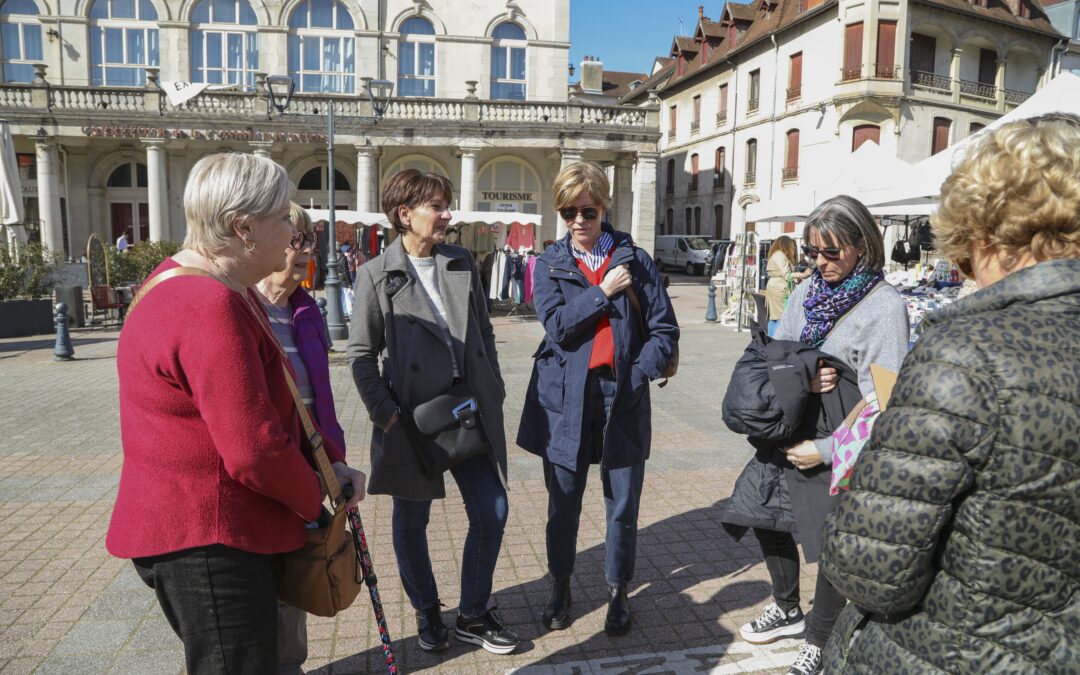
If you learn how to order wine in Salamanca, talk about food in Granada, ask for directions in the Jura, or chat to someone at a market in Italy, the language is no longer abstract.
It has a purpose.
And when language has a purpose, your brain pays attention.
That is why context is so important.
You do not just need to “know” the language.
You need to experience it.
The ear comes first
Before we can speak naturally, we need to hear differently.
At first, a foreign language can feel like one long stream of sound. Even if you know the words on paper, you may not recognise them when a native speaker says them quickly, naturally, with rhythm, accent and emotion.
This is completely normal.
One of the first things that happens when you spend time around a language is that your ear starts to sharpen.
You begin to recognise little phrases.
You hear patterns.
You catch endings.
You notice intonation.
You start to understand the rhythm of the language.
Not everything. Not immediately. But more than before.
And that is a very powerful stage in language learning.
For example, in a classroom you might learn:
“How are you?”
“I would like…”
“Where is…?”
“How much is it?”
But in real life, you hear all the little phrases that make a language sound natural.
In French, you begin to hear things like:
“Ça marche.”
“Vous voulez autre chose ?”
“On y va ?”
“Ce n’est pas grave.”
“Je vous en prie.”
“Vous avez besoin d’aide ?”
In Italian:
“Va bene.”
“Facciamo così.”
“Prego.”
“Dimmi.”
“Ci vediamo dopo.”
“Vuole assaggiare?”
In Spanish:
“Claro.”
“No pasa nada.”
“¿Te apetece?”
“Vamos.”
“Un momento.”
“¿Qué tal?”
These are small phrases, but they are the language of real life.
And the more your brain hears them in context, the more natural they become.
Confidence matters more than perfection
Many adult learners are very hard on themselves.
They think they should speak perfectly before they speak at all.
But that is not how language learning works.
You cannot become confident by waiting until you are perfect.
You become confident by trying, making mistakes, being understood, correcting yourself, and trying again.
Mistakes are not a sign that you are failing. They are a sign that your brain is working.
The problem is that many adults learned languages in a school environment where mistakes felt embarrassing. So, they carry that fear into adulthood.
At VICI, we want to remove that fear.
If you make a mistake, we do not want the conversation to stop. We want to guide you naturally, reformulate, give you the correct phrase, and keep you communicating.
Because communication is the point.
Not perfection.
The topic is the vehicle
This is one of our core beliefs at VICI:
The topic is the vehicle.
The language is the objective.
Communication is the method.
Confidence is the outcome.
For adults, this matters enormously.
A lesson on food is not really about food. It is about ordering, describing, comparing, giving opinions, remembering a place, talking about culture, sharing personal preferences.
A lesson on travel is not really about travel. It is about asking questions, solving problems, understanding signs, talking to people, managing the unexpected.
A lesson on art, wine, architecture, history, or daily life is not simply about information. It is a reason to use the language.
This is why lifestyle language learning works so well.
Because you are not just learning a language in theory. You are attaching it to things you already love culture, travel, food, people, conversation, beauty, history, movement, and discovery.
Why immersion helps the brain
Immersion does not mean understanding everything.
It means giving your brain more chances to notice, connect and practise.
When you are immersed in the language, you are not only learning in the classroom. You are learning while ordering a coffee, reading a menu, listening to a guide, walking through a market, asking a question, hearing a joke, joining a conversation.
Your brain gets repeated exposure without it feeling like repetition.
You hear the same words in different places.
You use the same phrases with different people.
You connect sounds with actions.
You connect vocabulary with emotion.
You remember because something happened.
That is very different from memorising a list at home.
A language holiday is not just a holiday
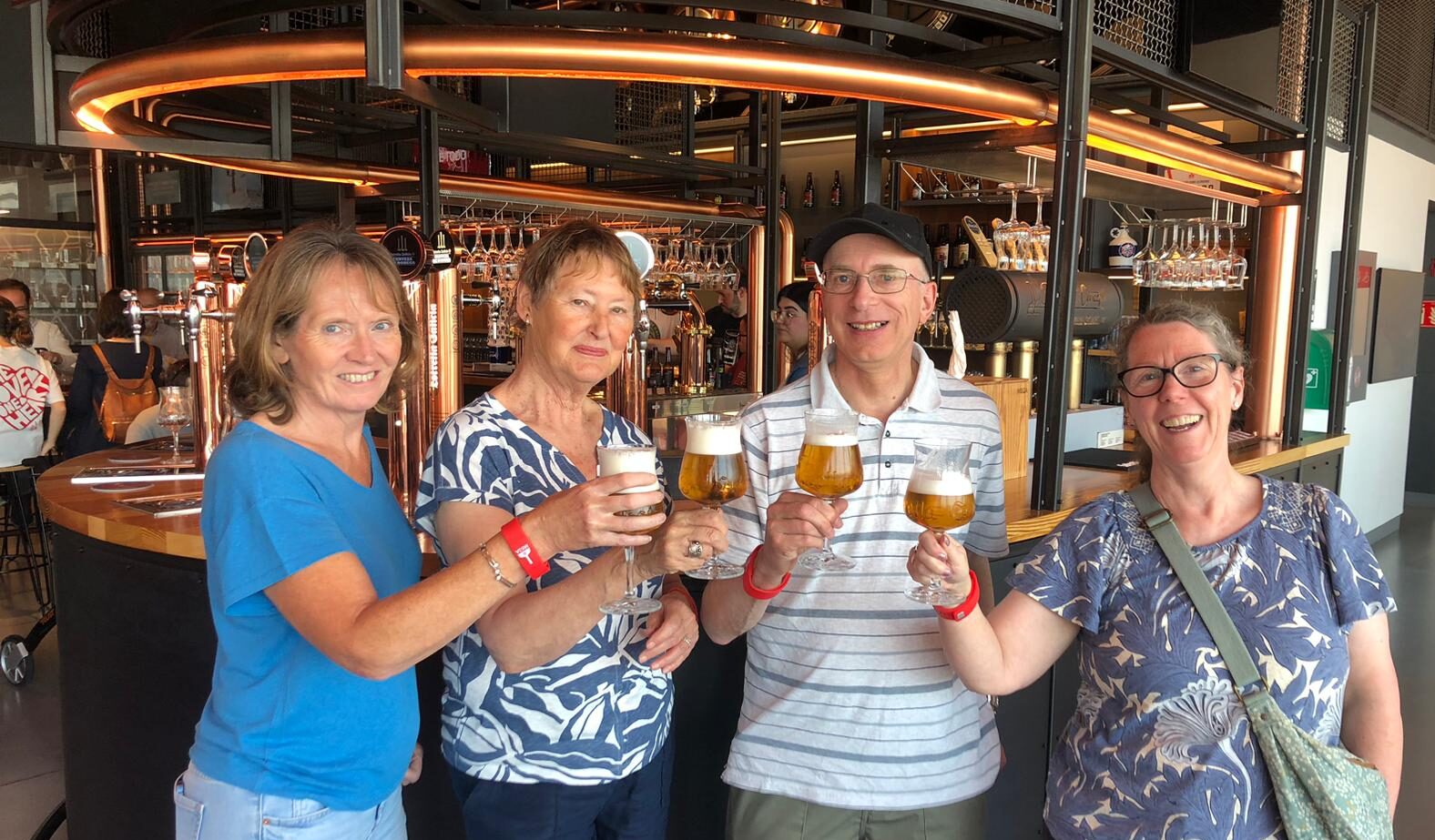
This is why we are so excited about our forthcoming language holiday retreats.
They are designed for adults who want to learn a language as part of a richer lifestyle experience.
Not a pressured academic course.
Not a grammar bootcamp.
Not a week of sitting silently in a classroom.
But a carefully designed experience where the language is connected to culture, place, and real communication.
This October, we are planning language retreats in:
Florence, Italy — for learners of Italian who want to experience the language through one of the most beautiful cultural cities in Europe.
Salamanca, Spain — for learners of Spanish who want to combine language, conversation, history, and Spanish life.
The Jura, France — for learners of French who want a more authentic, beautiful, and culturally rich French experience.
And next April, we already have a Spanish retreat planned in:
Granada, Spain — a wonderful setting for language, culture, architecture, food and conversation.
These retreats are for people who want to learn properly but also live beautifully.
They are for adults who want to improve their language while enjoying the culture that gives that language its soul.
What you can do now to help your brain
Even if you are not travelling immediately, you can start training your brain differently.
Do not only study the language. Surround yourself with it.
Listen to short podcasts, even if you do not understand everything.
Watch a series with subtitles.
Repeat useful phrases out loud.
Keep a small notebook of expressions you want to use.
Change your phone or navigation app into the language for a few days.
Read menus, signs, recipes, or travel articles.
Speak before you feel ready.
Accept mistakes as part of the process.
Most importantly, connect the language to your life.
If you love food, learn through food.
If you love travel, learn through travel.
If you love art, learn through art.
If you love people, learn through conversation.
Your brain remembers what feels useful, emotional, repeated, and real.
The real goal
The real goal is not to become perfect.
The real goal is to feel more alive in the language.
To understand a little more.
To dare a little more.
To connect a little more.
To travel differently.
To speak with more confidence.
To feel that the language belongs to you, not just to native speakers.
That is what we want for our learners at VICI.
Not just French, Italian, or Spanish as a subject.
French, Italian and Spanish as culture.
As connection.
As pleasure.
As confidence.
As life.
If you would like to experience this approach for yourself, do get in touch. We would be delighted to tell you more about our forthcoming language holiday retreats in Florence, Salamanca, the Jura, and Granada.
Well done Nathalie. This is an excellent article and I completely recognise all you say. I’d say don’t expect miracles but recognise that you are actually making them happen much more than you think. Learning is endlessly rewarding.